

You do not have to give up the foods you love to manage your weight. Often the issue is not what you eat but how much of it lands on your plate. Portion sizes have crept upward for decades, and our sense of a normal serving has grown with them. Learning to right-size your portions is one of the most practical and forgiving ways to eat less without feeling like you are on a diet, and without weighing every gram of food.
Why Portions Matter So Much
Weight change ultimately comes down to the balance of energy in and energy out. Large portions quietly tip that balance, because even healthy foods add up when servings are generous. Studies consistently show that when people are given bigger portions, they eat more without feeling any more satisfied. Your stomach and appetite adapt to what is in front of you, which means the size of your serving does a lot of the deciding for you.
Use Your Plate As A Guide
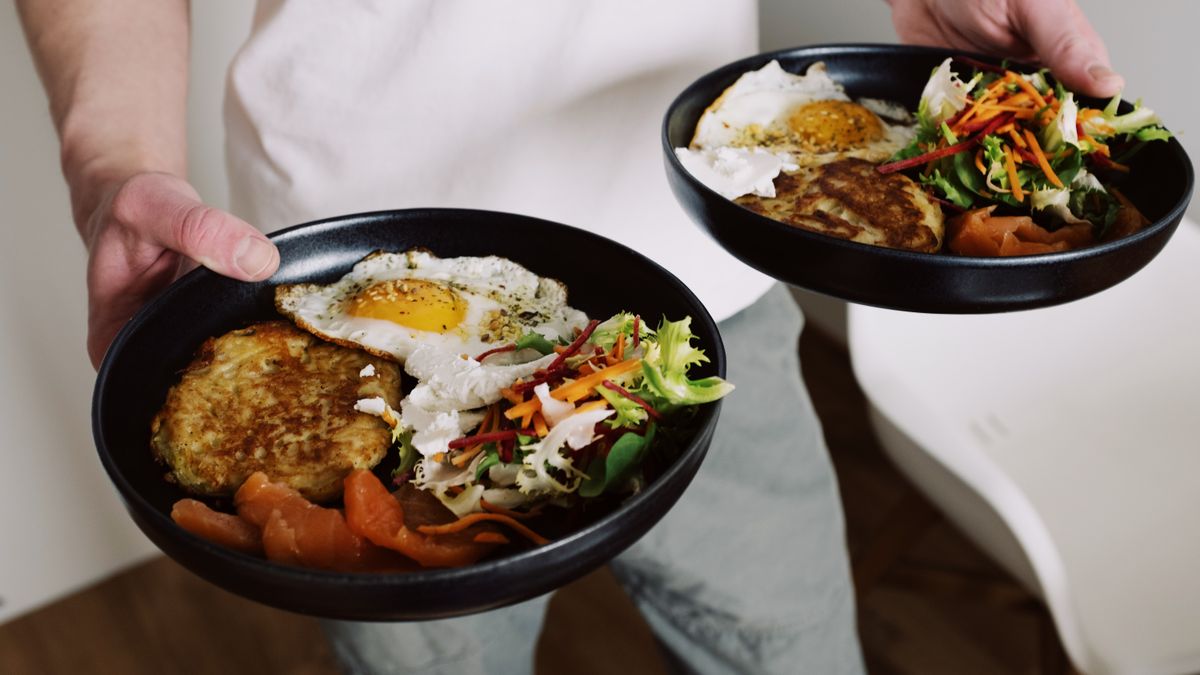
A simple, no-math approach is to build your plate by proportion rather than precise amounts. Aim to fill roughly half with vegetables and fruit, a quarter with protein such as fish, poultry, eggs, or beans, and a quarter with whole grains or starchy foods. This naturally moderates the higher-calorie parts of the meal while filling you up with fiber and volume from produce. It works at home, at a buffet, or on someone else’s cooking.
Let Your Hand Be The Measure
You do not need measuring cups to estimate portions. Your own hand is a handy, always-available guide. A palm-sized amount of protein, a cupped-hand of grains or carbohydrates, a fist of vegetables, and a thumb-sized portion of fats like oil or nut butter give you a reasonable serving without any equipment. Because bigger people tend to have bigger hands, this method scales roughly to your own needs.
Slow Down And Pay Attention
It takes time for your body to register fullness, so eating quickly often means eating past the point you needed. Slowing down gives those signals a chance to catch up. Put your fork down between bites, chew thoroughly, and try to eat without a screen in front of you. Eating mindfully helps you notice when you are comfortably satisfied rather than uncomfortably full, which is the real goal of portion control.
Outsmart Your Environment
The context around a meal shapes how much you eat more than most people realize. A few small tweaks help:
- Serve food onto plates in the kitchen rather than bringing serving dishes to the table for easy seconds.
- Use smaller plates and bowls, which make a moderate portion look generous.
- Store tempting snacks out of sight, and keep fruit and vegetables within easy reach.
- Portion snacks into a bowl instead of eating straight from the bag.
These changes require willpower once, when you set them up, rather than every single time you eat.
Be Smart When Eating Out
Restaurant portions are often two or three times what you need. You can box up half before you start, split a dish with someone, or order a starter as your main. Being aware that a large plate does not obligate you to finish it is half the battle. The same applies to packaged foods, where a single container often holds several servings.
Do Not Confuse Portion Control With Deprivation
The aim is not to leave the table hungry. If you feel unsatisfied, add more vegetables, lean protein, or fiber-rich foods, which fill you up for relatively few calories. Portion control works best as a long-term, flexible habit that still leaves room for foods you enjoy in sensible amounts. Treating it as a strict rule you must never break usually backfires.
Frequently Asked Questions
Do I have to count calories to control portions? No. Visual guides like the plate method and your hand give you a good sense of portions without tracking every calorie, which is easier to maintain long term.
Will smaller portions leave me hungry? Not if you prioritize filling foods. Vegetables, protein, and fiber keep you satisfied on fewer calories, so you can eat a satisfying volume of food.
How long until portion control becomes natural? With repetition, right-sizing your meals starts to feel automatic within a few weeks. The initial adjustment is the hardest part.
The Takeaway
Portion control is a quietly powerful tool because it lets you keep eating the foods you enjoy while gently reducing how much you take in. Use your plate and your hand as guides, slow down at meals, and set up your environment to make moderate portions the easy default. Done consistently, these habits support your weight without the misery of feeling deprived.
Related: Thinking about GLP-1 medication? Our Gala GLP-1 review breaks down what to expect from an online weight-loss program.
If you’re exploring medically supervised weight-loss options, see our hands-on Yucca GLP-1 program review and our Trimi GLP-1 review.