


Building muscle is not just about looking strong. More muscle helps you move well, protects your joints, supports your metabolism, and keeps you capable and independent as you age. If you are new to strength training, the process can seem intimidating, but the fundamentals are simple. This beginner’s guide walks through how muscle grows and how to build it, whether you train at a gym or at home.
How Muscle Actually Grows
Muscle grows through a process called hypertrophy. When you challenge a muscle with resistance, you create tiny stresses in its fibers. Your body responds by repairing those fibers and building them back slightly bigger and stronger, so they can handle the load next time. This is why muscle is built during recovery, not during the workout itself. Three ingredients drive the process: challenging your muscles enough to prompt adaptation, giving them the protein they need to rebuild, and allowing enough rest for repair to happen.
Focus On Progressive Overload
The single most important principle in building muscle is progressive overload, which simply means gradually asking your muscles to do more over time. If you lift the same weight for the same reps forever, your body has no reason to keep adapting. You can progress by adding a little weight, doing an extra rep or two, adding a set, or improving your control and range of motion. Small, steady increases are what signal your body to keep growing.
Prioritize Compound Exercises
Beginners get the best results from compound movements, which work several muscle groups at once. These give you the most strength and muscle for your time and build a solid foundation. A simple, effective routine can be built around a handful of movement patterns:
- Squats and lunges for the legs and glutes
- Pushing movements like push-ups or a chest press
- Pulling movements like rows or pull-downs
- A hinge movement like a deadlift or hip hinge for the back of the body
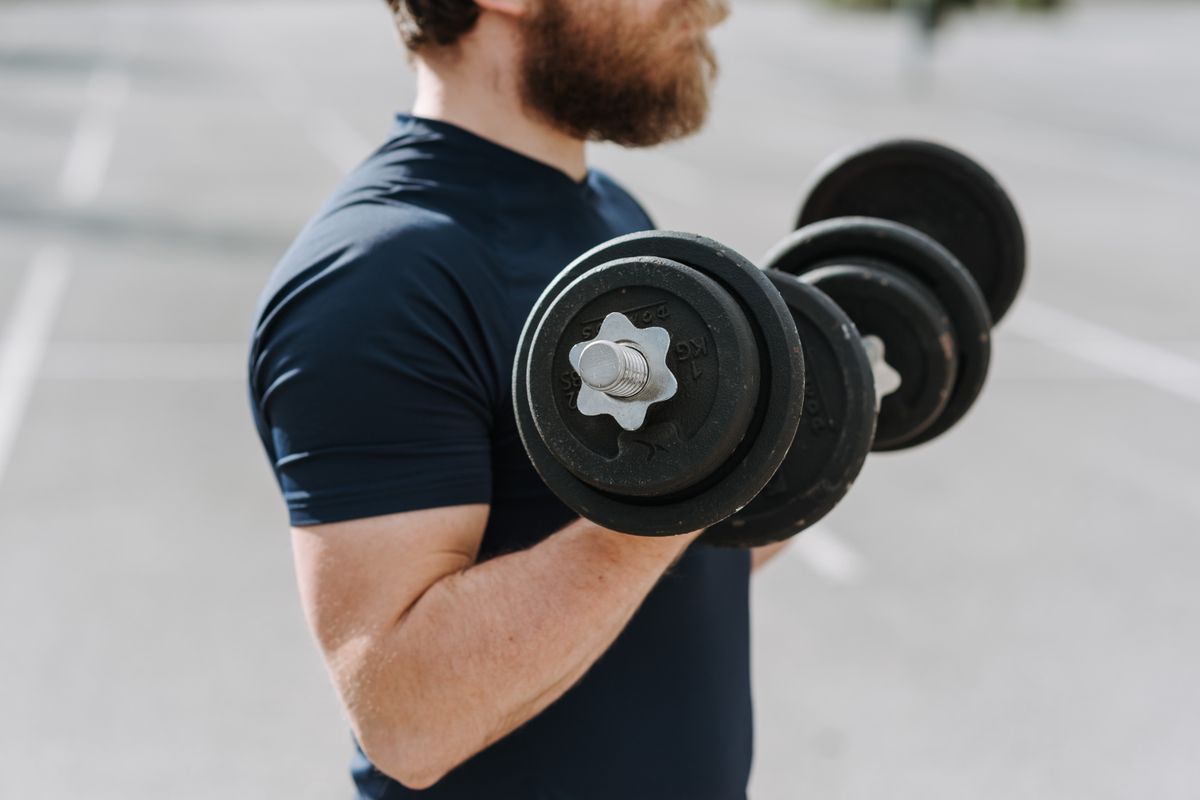
You can perform these with dumbbells, machines, resistance bands, or just your body weight. Isolation exercises, such as bicep curls, have their place, but they are best added after the big lifts.
How Often And How Much To Train
For beginners, training each major muscle group two to three times per week produces strong results. That might look like two or three full-body sessions, with a day of rest in between. A common starting point is three to four sets of about 8 to 12 repetitions per exercise, using a weight that feels challenging by the last few reps but still allows good form. You do not need marathon workouts; 30 to 45 focused minutes is plenty when you are starting out.
Eat Enough Protein And Calories
You cannot build muscle out of nothing. Your body needs enough overall energy and, crucially, enough protein to repair and grow tissue. A common guideline is roughly 1.6 to 2.2 grams of protein per kilogram of body weight per day, spread across meals. Good sources include eggs, poultry, fish, dairy, beans, lentils, and tofu. If you are trying to gain muscle, you generally need to eat at least enough calories to support growth rather than being in a steep deficit.
Rest And Recovery Are Part Of The Plan
Muscle is built between workouts, so recovery is not optional. Give each muscle group at least a day before training it hard again, and prioritize sleep, since much of your body’s repair and hormone production happens overnight. Aim for seven to nine hours a night. Overtraining without adequate rest can stall your progress and increase your risk of injury. If you feel constantly exhausted or sore, that is a sign to add more recovery.
Be Patient And Consistent
Muscle growth is a slow, steady process. Beginners often notice strength gains within a few weeks as their nervous system adapts, while visible size changes usually take a couple of months of consistent training. The people who succeed are not the ones with the most intense single workouts, but the ones who show up regularly for months. Track your workouts so you can see your lifts improving, which is both motivating and proof that your plan is working.
Frequently Asked Questions
Can I build muscle at home without a gym? Yes. Bodyweight exercises, resistance bands, and a set of adjustable dumbbells can build real muscle, especially for beginners, as long as you apply progressive overload.
How long until I see results? Expect noticeable strength gains in a few weeks and visible muscle changes in roughly two to three months of consistent training and adequate nutrition.
Do I need supplements to build muscle? No. Whole foods with enough protein and calories are the foundation. Supplements like protein powder can be convenient but are not required.
The Takeaway
Building muscle comes down to a few reliable principles: challenge your muscles with resistance, add a little more over time, eat enough protein and overall food, and give your body rest to recover. Focus on compound exercises, train each muscle group a few times a week, and stay consistent. Progress may be gradual, but with patience the results, in strength, health, and confidence, are well worth it.
Related: Looking at supplements for performance? See our Beam review.