


By Marcus Reyes · Updated August 15, 2026 · Fact-checked
Walk into any gym and you will see people training chest, arms, and abs. Almost nobody trains grip. Yet ask researchers which single fitness measure tracks most closely with how well people age, and grip strength keeps showing up — study after study.
That does not mean squeezing a hand gripper adds years to your life. But your grip says a surprising amount about the state of your whole body, and building it pays off in ways you feel every day: heavier deadlifts, easier yard work, jars that finally give up.
Why scientists measure grip in the first place
Partly because it is easy. A handheld device called a dynamometer measures grip force in seconds, costs little, and works the same in a lab in Toronto or a village clinic in Nepal. That practicality made grip a favorite in huge international studies — including one that followed roughly 140,000 people across 17 countries and found grip strength predicted cardiovascular problems better than blood pressure did.
The reason it works as a signal: your grip reflects total muscle mass, nervous-system health, and how physically active your life has been. It is a small window with a wide view.
What a weak grip can signal — and what it cannot
Be careful with the causation trap here. A weak grip does not cause poor health any more than gray hair causes birthdays. It is a marker, and the associations run through overall strength: people whose grip declines quickly tend to be losing muscle everywhere, and that loss is what carries the risk.
Which also means you cannot game the number. Training only your forearms to impress a researcher misses the point entirely. The goal is a stronger body — the grip just reports on it.
What actually determines grip strength
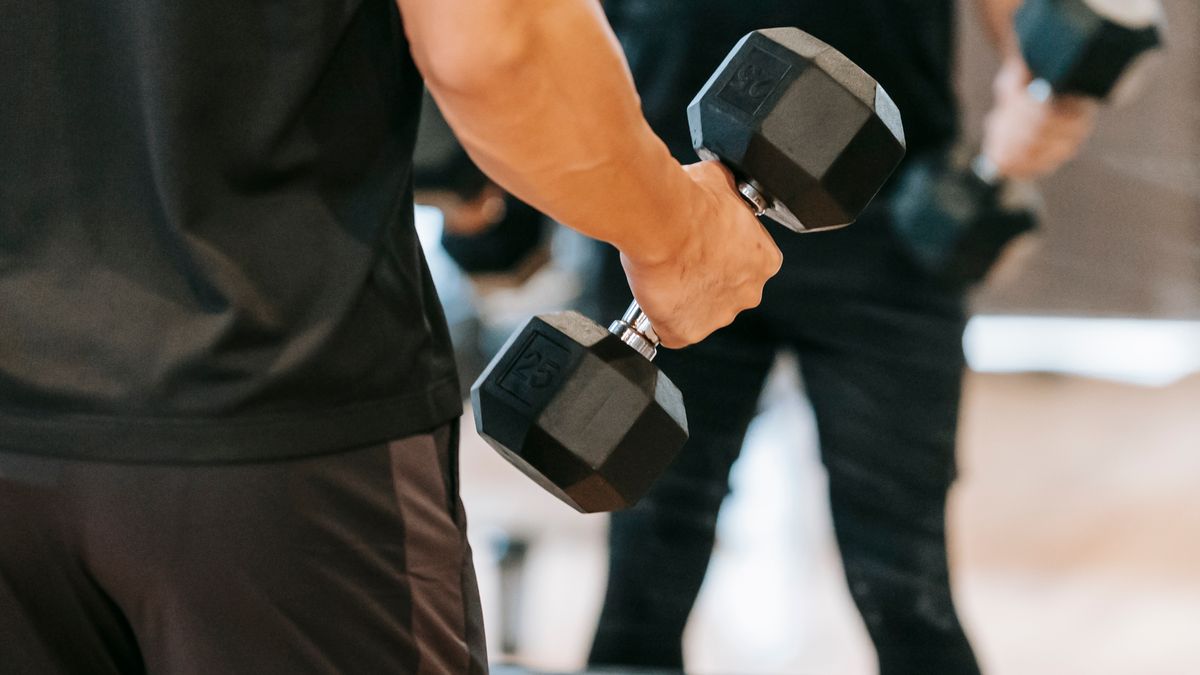
- Forearm muscle — most of your gripping force comes from muscles below the elbow
- Overall training — people who lift, climb, row, or do physical work grip harder
- Age — grip typically peaks in your 30s and declines slowly after, faster without training
- Hand size and genetics — leverage matters; some of it you are simply born with
- Fatigue and recovery — grip is often the first thing to fail in a hard week
How to test yours at home
A dynamometer costs about as much as a takeout dinner and gives you a number to track. No gadget? Use practical benchmarks: hang from a pull-up bar with straight arms and see how long you last — for many adults, 30 to 60 seconds is a respectable target and a minute-plus is strong. Or notice the everyday tells: grocery bags, stubborn jars, a firm handshake that does not strain.
Whatever you use, the trend beats the number. A grip that is slowly rising is a body getting stronger.
The best exercises for a stronger grip
- Dead hangs — hang from a bar, arms straight, shoulders active; the simplest pure grip builder there is
- Farmer’s carries — pick up two heavy dumbbells and walk; trains grip, core, and posture in one move
- Deadlifts and rows without straps — double-overhand until your grip fails first, then strap up for top sets
- Towel hangs or towel rows — wrap a towel around the bar; the thick, soft grip works your hands brutally
- Plate pinches — pinch two smooth plates together at your side to build thumb strength
- Extensor work — loop a rubber band around your fingers and open your hand; balances all that squeezing
Two or three focused sets, two or three times a week, is plenty. Grip recovers slower than people expect — hands that are wrecked every day stop adapting.
Where you will notice it outside the gym
Grip is the most useful kind of strength because everything routes through your hands. Carrying a full water jug up the stairs, holding a wriggling toddler, hauling mulch bags, keeping hold of a dog that just saw a squirrel — all grip. For older adults it becomes even more practical: hand strength is closely tied to staying independent with cooking, dressing, and opening the things that need opening. The National Institute on Aging lists strength work among the most valuable kinds of exercise as you get older, and your hands are part of that.
Mistakes that stall progress
- Using lifting straps for every single set — fine for top-end work, but your grip never gets a vote
- Only squeezing a gripper — crushing strength is one narrow slice; carries and hangs transfer better
- Ignoring the extensors — endless squeezing without opening work can leave elbows cranky
- Training grip fresh every session — slot it at the end, after the lifts that need your hands
If you are new to lifting altogether, start with our beginner’s guide to building muscle — grip work slots neatly into it. Like balance training, it is one of those unglamorous skills that quietly pays off for decades.
Frequently asked questions
What is a good grip strength for my age?
Reference values vary by age, sex, and hand size, so a single number is not very useful. Roughly speaking, healthy men in midlife often measure around 40 to 50 kg on a dynamometer and women around 25 to 35 kg — but your own trend over months matters far more than any table.
Do hand grippers actually work?
Yes, for crushing strength specifically. They are convenient and portable, but if you only have time for one thing, heavy carries and dead hangs build grip that transfers better to lifting and daily life.
Can I train grip every day?
Light work like band extensions or easy hangs, sure. Heavy gripping needs recovery like any other strength work — most people do best with two or three hard sessions a week.
The takeaway
Grip strength is a fitness signal worth watching and a skill worth training. It reflects the state of your whole body, it responds quickly to simple work like hangs and carries, and the payoff shows up everywhere from the gym to the grocery store. You do not need a gripper collection or a forearm day — just stop letting straps and machines do all the holding.
This article is for general information only and is not medical advice. If you have joint pain, arthritis, or a recent injury, check with a qualified health professional before starting new grip work.
More hands-on reviews from our team: Gala GLP-1 review, Medterra CBD review, MontKush review, and Secret Nature review.