


You do not need a gym membership, a rack of dumbbells, or a lot of space to build real strength. Your own body weight is a versatile, always-available tool, and used well it can improve muscle, endurance, balance, and everyday function. Bodyweight training is how many people get fit at home, while traveling, or on a tight budget. Here is how to build an effective bodyweight routine that grows with you, even if you are starting from scratch.
Why Bodyweight Training Works
Muscles get stronger when you challenge them against resistance, and your body provides plenty of it. Movements like squats, push-ups, and lunges recruit large muscle groups and often several joints at once, which builds practical, coordinated strength. Because these exercises mirror everyday actions such as standing, pushing, and climbing, the strength you gain transfers directly to real life. Bodyweight work also trains balance and core stability in a way that isolated machine exercises often do not.
The Core Movement Patterns To Cover
A well-rounded routine hits a handful of basic patterns rather than chasing dozens of random exercises. Aim to include something from each of these:
- Squatting: bodyweight squats, split squats
- Pushing: push-ups and their variations
- Lunging: forward, reverse, or walking lunges
- Hinging: glute bridges and hip hinges
- Core and stability: planks and dead bugs
Covering these patterns means you train your whole body without needing a long list of moves.
Starting From The Very Beginning
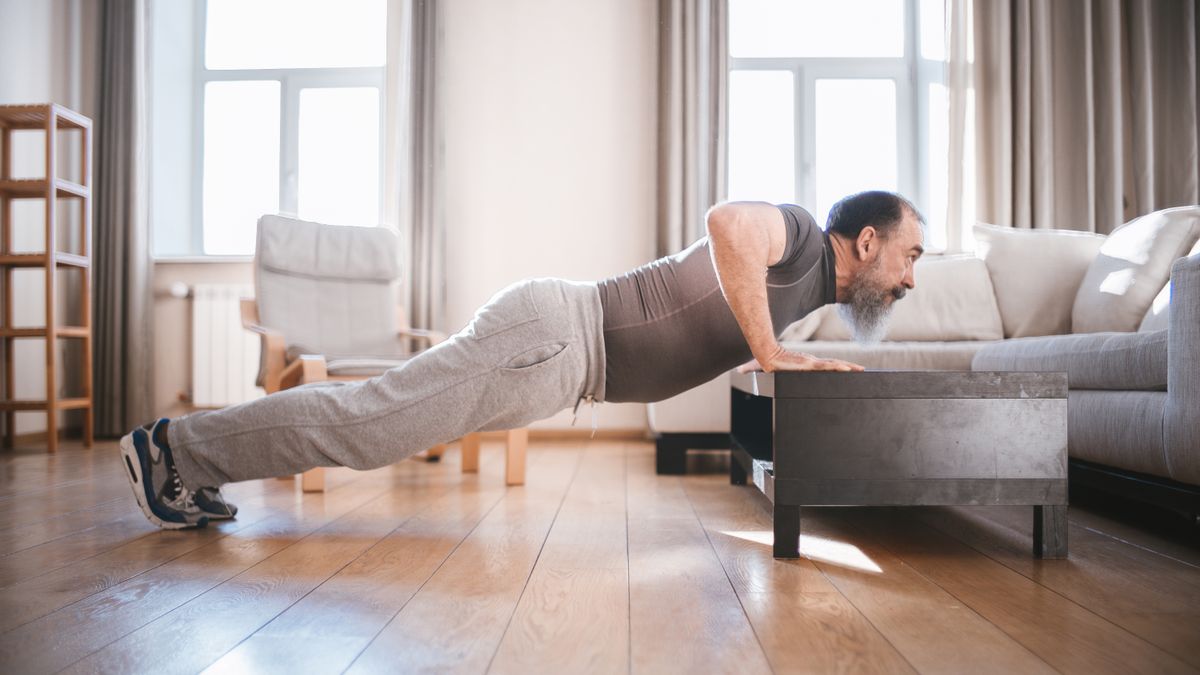
If you are new to exercise, begin with easier versions and focus on control. Push-ups can be done against a wall or with your hands on a raised surface before you progress to the floor. Squats can be practiced by standing up from a sturdy chair. There is no shame in regressions; they let you build strength and confidence safely. Quality of movement always beats quantity in the early stages.
How To Make Exercises Harder Over Time
The challenge with bodyweight training is that once a movement gets easy, you need a way to keep progressing. Fortunately there are several levers you can pull:
- Do more repetitions or add another set
- Slow down the movement, especially the lowering phase
- Reduce rest time between sets
- Progress to a harder variation, such as moving from knee to full push-ups
- Add pauses at the hardest point of the movement
This principle of gradually increasing the demand is what keeps your muscles adapting and getting stronger.
A Simple Weekly Structure
For most beginners, two to three full-body sessions a week, with a rest day in between, is a solid starting point. A basic session might include a squat movement, a push movement, a lunge, a hinge, and a core exercise, doing two to three sets of each for a comfortable number of repetitions. Sessions can be as short as twenty to thirty minutes. Consistency across weeks matters far more than any single perfect workout.
Warm Up And Protect Your Joints
A few minutes of light movement before you start prepares your muscles and lowers the risk of strain. Gentle marching, arm circles, and easy versions of the movements you are about to do all work well. Pay attention to form over speed, keep movements controlled, and stop if you feel sharp pain, as opposed to normal muscle effort. Building in rest days gives your body the time it needs to recover and grow stronger.
Staying Consistent And Motivated
The biggest advantage of bodyweight training is convenience, so use it. Keep your routine simple enough that you will actually do it, and attach it to an existing habit, like training right after your morning coffee. Tracking your progress, whether it is more reps or a harder variation, gives you visible proof that you are improving. Even short sessions done regularly beat ambitious plans you abandon after a week.
Frequently Asked Questions
Can I really build muscle without weights? Yes, especially as a beginner. By progressively making exercises harder, you can build meaningful strength and muscle with bodyweight alone. Very advanced lifters may eventually want added resistance, but most people have plenty of room to grow first.
How often should I train? Two to three full-body sessions a week with rest days in between suits most beginners. You can adjust as your fitness improves.
What if I cannot do a single push-up? Start with wall or incline push-ups and build from there. Everyone begins somewhere, and easier variations are a legitimate part of training, not a failure.
The Takeaway
Bodyweight workouts prove that effective strength training does not require equipment or a gym. By covering the main movement patterns, starting at a level that fits you, and gradually making exercises more challenging, you can build strength, stability, and endurance almost anywhere. Keep it simple, warm up, respect rest days, and let consistency do the heavy lifting. Your body is all the equipment you need to begin.
Related: Looking at supplements for performance? See our Beam review.