


By Marcus Reyes · Updated August 12, 2026 · Fact-checked
Ask most people about their workouts and you will hear about strength, cardio, maybe a stretch here and there. Balance almost never makes the list. It tends to get noticed only after a stumble on the stairs, a rolled ankle on a curb, or a near-miss reaching for something on a high shelf.
That is a shame, because balance training is about the cheapest insurance your body can buy. It takes minutes a day, needs no equipment, and the benefits stack up for decades. Here is why it deserves a spot in your routine, and how to start without buying a single wobble board.
Balance fades before strength does
Your sense of balance peaks earlier than you might expect, and research suggests it starts slipping measurably in your 40s, often before strength or endurance show any decline. One large study of adults aged 51 to 75 found that people who could not stand on one leg for 10 seconds had a notably higher risk of death over the following years. Balance, it turns out, is a surprisingly honest snapshot of overall health.
The decline is quiet. You will not feel it day to day, and that is exactly the problem. Falls are the leading cause of injury among adults 65 and older, according to the CDC, but the groundwork for staying upright gets laid decades earlier. The 40-year-old who practices standing on one leg while brushing his teeth is doing his 70-year-old self a real favor.
What balance training actually does
Staying steady is a team effort between three systems: your eyes, your inner ear, and proprioception, which is your body’s sense of where its parts are in space. Thousands of tiny sensors in your muscles, tendons, and joints constantly report your position to your brain, which makes micro-corrections faster than you can consciously think.
Balance training sharpens that whole loop. When you practice standing on one leg, you are not just working the leg. You are teaching your nervous system to detect sway earlier and respond quicker, and you are strengthening the small stabilizing muscles around your ankles, knees, and hips that regular gym machines mostly ignore.
The payoff shows up outside the gym
Better balance means fewer ankle sprains when you step off a curb wrong, more stable squats and lunges, and better performance in nearly any sport that involves changing direction. Runners with stronger stabilizers tend to have fewer overuse injuries, since every stride is essentially a small single-leg balance test repeated thousands of times.
For older adults the stakes are higher. Structured balance practice is one of the best-studied ways to reduce fall risk, and it protects independence in a way few other exercises can. But you do not have to be 70 to collect the benefits. You just have to start.
Five drills you can do while the coffee brews
No mat, no gym, no excuses. Try these barefoot or in flat shoes, near a wall or counter you can touch if needed:
- Single-leg stand. Lift one foot and hold for 30 seconds per side. Too easy? See the progressions below.
- Heel-to-toe walk. Walk a straight line placing the heel of one foot directly in front of the toes of the other, 10 steps forward and back.
- Weight shifts. Stand with feet hip-width apart and slowly shift your weight side to side, lifting the unweighted foot slightly.
- Standing march. March in place slowly, pausing for two seconds at the top of each knee lift.
- Sit-to-stand without hands. Rise from a chair without pushing off. It trains legs, hips, and balance in one honest move.
How to make the drills harder
Balance work only improves what it challenges, so once a drill feels comfortable, change something. Close your eyes during a single-leg stand and you will instantly appreciate how much your vision was helping. Stand on a folded towel or couch cushion to make the surface unstable. Add movement, like passing a water bottle around your body or turning your head side to side while you hold the position.
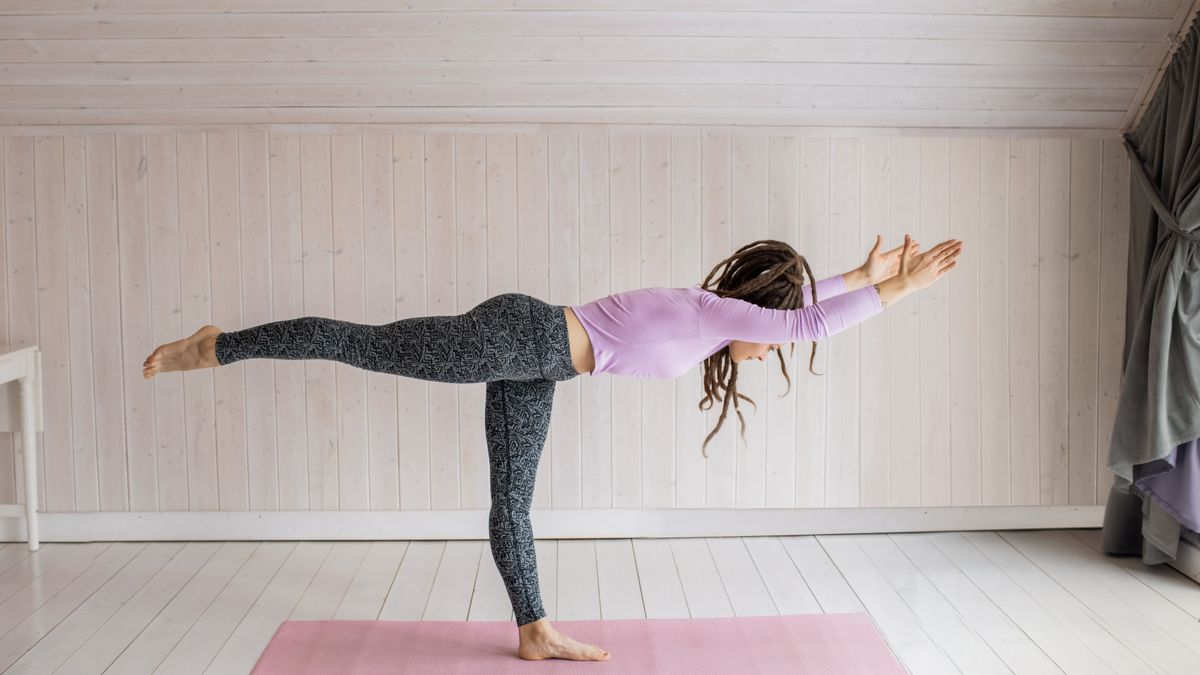
You can also load the drill: hold a kettlebell in one hand, or do a single-leg deadlift reaching toward the floor. Progress one variable at a time, and always keep something sturdy within reach.
Pair balance with strength work
Balance and strength are not competing priorities; each makes the other better. Strong glutes and calves give your stabilizing reflexes something to work with, and a solid midsection keeps your center of gravity under control. If you have been meaning to work on that, our guide to building core strength pairs naturally with the drills above.
If joint pain has kept you from training at all, balance drills also slot neatly into low-impact workouts, since almost none of them involve pounding or jumping.
How often is enough?
Little and often beats long and rare. Five to ten minutes most days will move the needle within a few weeks, and consistency matters more than duration. Many fall-prevention programs that show results in research run about three sessions a week, so treat that as a floor if daily practice feels like too much.
The nice part is that balance training hides easily inside a normal day. One foot while you brush your teeth. Heel-to-toe down the hallway. A slow march while the kettle heats. Nobody even has to know you are exercising.
FAQ
Am I too young to worry about balance?
No. Balance starts declining in midlife, and the habit is easiest to build while the skill is still sharp. Athletes in their 20s train it for injury prevention and performance, not fall risk.
Can balance really be improved, or is it mostly genetic?
It responds to practice at any age. Studies in adults from their 20s to their 90s show measurable improvement within weeks of consistent training, because the nervous system adapts just like muscle does.
Is yoga enough for balance training?
Yoga helps a lot, since many poses are essentially loaded balance holds. If you practice regularly, you are covering much of this ground. Adding a few eyes-closed or unstable-surface drills fills in the rest.
The takeaway
Balance is a skill, not a fixed trait, and it quietly shapes how well you move now and how independent you stay later. A few minutes of single-leg stands, heel-to-toe walks, and honest sit-to-stands most days is enough to sharpen it. Start today, next to a wall, and make it as routine as brushing your teeth.
This article is for general information only and is not medical advice. Talk with a healthcare professional before starting a new exercise program, especially if you have a history of falls, dizziness, or joint problems.
If you are exploring medically supervised weight-loss options, see our hands-on Yucca GLP-1 program review and our Trimi GLP-1 review.